

The Importance of Sustainability in the Transport Sector
Sustainable transport is now a must in today's logistics world. The data from the recent ISPRA 2024 report raise an alarm that we cannot ignore: from 1990 to 2022, emissions from the transport sector have recorded an increase of 7%, in stark contrast to other economic sectors.
Italy has the goal of reducing greenhouse gas emissions by 43.7% compared to 2005 levels by 2030. However, the failure to decrease emissions in the transport sector has led to an approach to the maximum allowed limits, exceeded in 2021 and 2022.
The data in the image below highlight the importance of optimizing every kilometer traveled, maximizing loads and reducing the environmental impact per kilometer through the use of more efficient vehicles.

In the transport sector, sustainability is now an imperative, not only to respond to increasingly stringent environmental regulations but above all to protect our planet. Europe Transport and Logistics (ETL) is at the forefront of this process of change, promoting innovative solutions for sustainable car transport.
Sustainable transport is no longer an option, but the path to a cleaner future!
Euro 6 Car Carriers: Innovation and Emission Reduction in Sustainable Transport
Euro 6 car carriers represent the pinnacle of technology in sustainable transport, offering a concrete solution for reducing emissions in car transport. Europe Transport and Logistics has chosen to invest in this cutting-edge technology, demonstrating a concrete commitment to transport and sustainability.
Technical Features of Euro 6 Car Carriers
These vehicles are designed with innovative technologies that allow a drastic reduction in emissions:
- Reduction of NOx emissions by up to 90% compared to previous vehicles
- Use of advanced systems such as exhaust gas recirculation (EGR), selective catalytic reduction (SCR)
Advantages of Sustainable Transport with Euro 6 Car Carriers
Environmental Impact
Euro 6 car carriers offer significant benefits in terms of sustainability:
- Drastic reduction of particulate emissions
- Improvement of air quality
- Concrete contribution to the fight against pollution in the transport sector
Economic Efficiency
In addition to the environmental aspect, these vehicles ensure:
- Optimization of fuel consumption
- Reduction of long-term operating costs
- Compliance with the most stringent environmental regulations
Sustainable Transport in Action
ETL has chosen to use exclusively Euro 6 car carriers for: a practical example is the implementation of a monitoring system that allows real-time analysis of vehicle performance, thus optimizing transport operations:
- Maximize load capacity (up to 10 vehicles per car carrier)
- Minimize empty trips
- Implement real-time monitoring via GPS
A Step Forward in Sustainable Transport
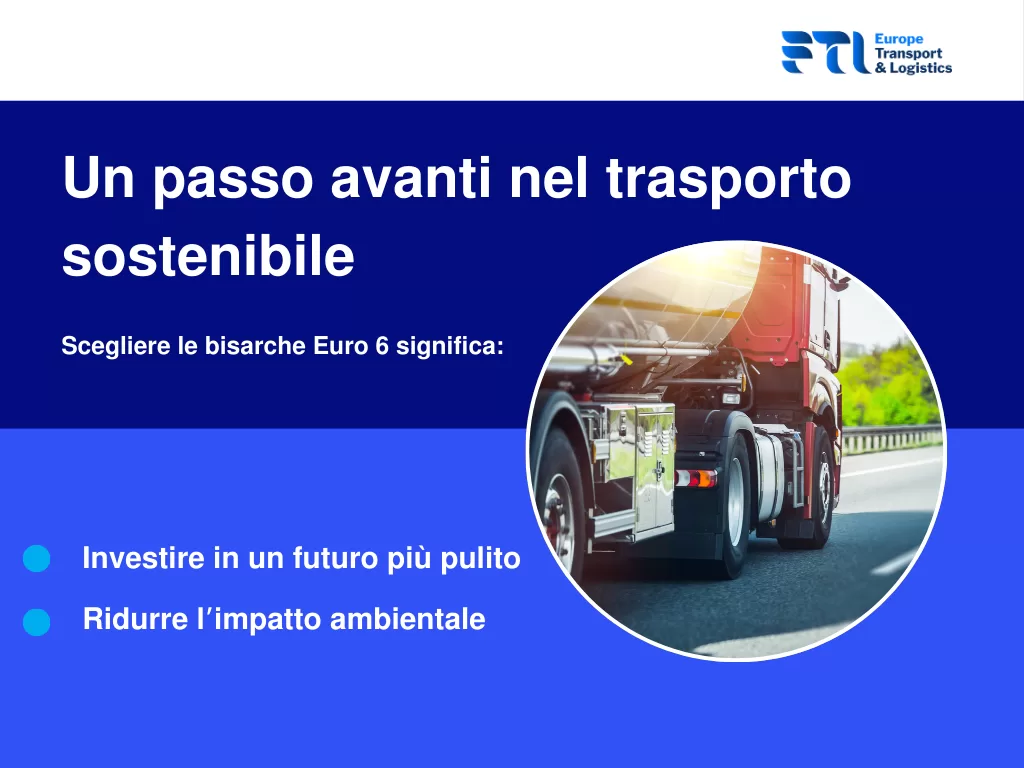
Choosing Euro 6 car carriers means:
- Investing in a cleaner future
- Concretely reducing the environmental impact of car transport
- Demonstrating a tangible commitment to sustainability
Thanks to this technology, ETL manages to guarantee a quality service while minimizing environmental impact, thus responding to the needs of companies that want sustainable car transport.
Want to do your part for more sustainable transport? Request a quote!
The Importance of Optimization in Sustainable Transport
In the landscape of sustainable transport, load optimization represents a fundamental element to reduce the environmental impact of car transport. Europe Transport and Logistics (ETL) has developed an innovative approach that combines logistical efficiency and environmental sustainability.
Capacity Maximization
The main strategy focuses on maximizing load capacity. Each Euro 6 car carrier is carefully planned to transport the maximum number of vehicles, significantly reducing the kilometers traveled and consequently emissions. This method allows minimizing empty trips, one of the main problems in the transport sector.
Intelligent Software for Green Logistics
ETL uses technological tools that allow identifying the most efficient routes, considering factors such as traffic, weather conditions, and road restrictions. The goal is twofold: optimize transport and reduce environmental impact.
Shipment Consolidation: Fewer Trips, more Sustainability
Shipment consolidation becomes a fundamental strategy for sustainable transport. By grouping multiple loads into a single trip, ETL manages to drastically reduce CO2 emissions and operational costs. This methodology represents a concrete approach to transport and sustainability.
Continuous Monitoring and Analysis
An integrated GPS monitoring system allows real-time control of each individual shipment. This technology enables the collection of valuable data to constantly improve transport efficiency, immediately identifying possible optimizations in load and route.
Concrete Advantages of the ETL Approach
The implemented strategies guarantee a significant reduction in emissions in car transport. The optimized load capacity, combined with the use of Euro 6 car carriers, allows reducing the kilometers traveled by up to 40% and consequently reducing the environmental impact.
ETL demonstrates that optimizing loads is not just an economic strategy, but represents a crucial step towards sustainable and responsible transport! Each trip is designed to maximize efficiency and minimize the ecological footprint.
Want to see how we can make your transport more sustainable and efficient? Contact ETL today!
Conclusion
Sustainable transport is not only an environmental necessity but also represents an opportunity for innovation and growth. ETL demonstrates daily how it is possible to combine operational efficiency and respect for the environment, offering concrete solutions for reducing emissions in car transport.
Choosing a partner like ETL means actively contributing to a more sustainable future, while benefiting from a cutting-edge transport service fully oriented towards green logistics.
To discover how we can make your car transport more sustainable and implement sustainable transport practices in your company, contact us today through our website or call us for a personalized quote.
FAQ
What is sustainable mobility for?
Contributing to the European Green Deal objectives, which aim for a 60% reduction in transport emissions by 2030 compared to 1990 levels
Significantly reducing CO2 emissions in the transport sector, which currently accounts for 25% of total greenhouse gas emissions in Italy
Improving air quality in urban areas, contributing to the reduction of respiratory diseases
Optimizing transport systems to respond to social and economic needs in an eco-compatible way
What is zero-emission mobility?
Goal of achieving climate neutrality in the transport sector by 2050
Use of transport means that do not produce direct greenhouse gas emissions
Implementation of electric or hydrogen propulsion systems
Integration of efficient and sustainable public transport networks
Development of infrastructure for electric and shared mobility
What are the reasons to encourage sustainable mobility?
Encouraging sustainable mobility is fundamental for several interconnected reasons. Firstly, it significantly contributes to reducing greenhouse gas emissions and improving air quality in cities. Moreover, sustainable mobility leads to greater economic efficiency through the optimization of transport costs and the reduction of dependence on fossil fuels. No less important is the social impact: more sustainable transport systems create more livable cities, improve public health, and promote a healthier lifestyle for all citizens.
What is green transport?
Uses low environmental impact technologies and vehicles (such as Euro 6 car carriers)
Optimizes routes and loads to reduce emissions per kilometer
Implements intelligent transport monitoring and management systems
Favors the use of renewable energies and clean technologies
Aims to reduce the carbon footprint of the entire logistics chain

